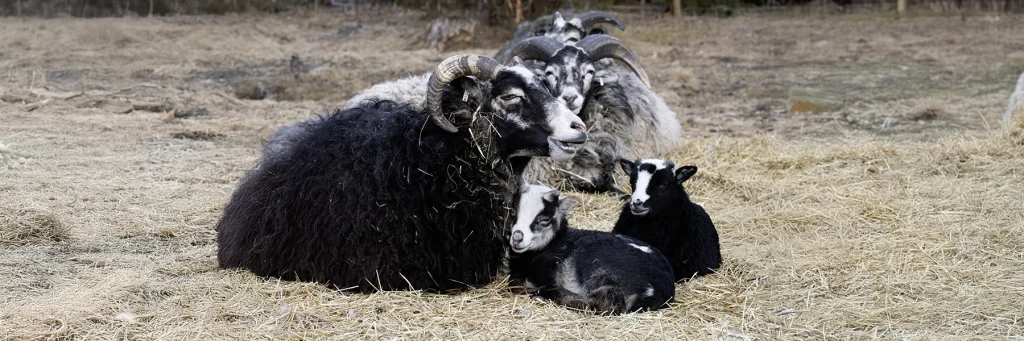
Heat cycles in ewes
Heat in the ewes influences both planning and daily work during the winter months. Here I describe how heat presents itself, how often it returns, and the experiences I have gained over the years.
Time of heat
Ewe lambs are just over six months old when they show their first heat. If lambs are born in April or May, the first heat cycles can therefore be expected in late November or early December.
If a ewe is not bred the first time, she will return to heat. The interval between cycles is somewhere around 18 days, based on the heats I have observed, not all ewes show clear signs. The heat itself lasts for about two days, and the ewe is most receptive during the latter part of the second day.
If the ewes are not bred, they will continue to cycle. The latest heat I have personally experienced was in March.
One year I returned a ram too early. At that time I had only one ram, and I lent him out because I had decided not to have any lambs that season. I brought him home far too soon, and the result was lambing in the first week of August.
As for gestation length, I usually calculate 145 days, plus or minus two. Literature often states 145 to 147 days. Counting back 145 days means the ewes were bred in early March. It was a useful lesson..
How you can tell when an ewe is in heat?
In early December, I bring one, sometimes several, rams to the ewes. The ram is placed in a separate section of the barn together with selected ewes, I no longer breed all of them. The ewes, who can move freely in and out of the barn during winter, can often be seen circling the building while in heat, hoping to reach the ram.
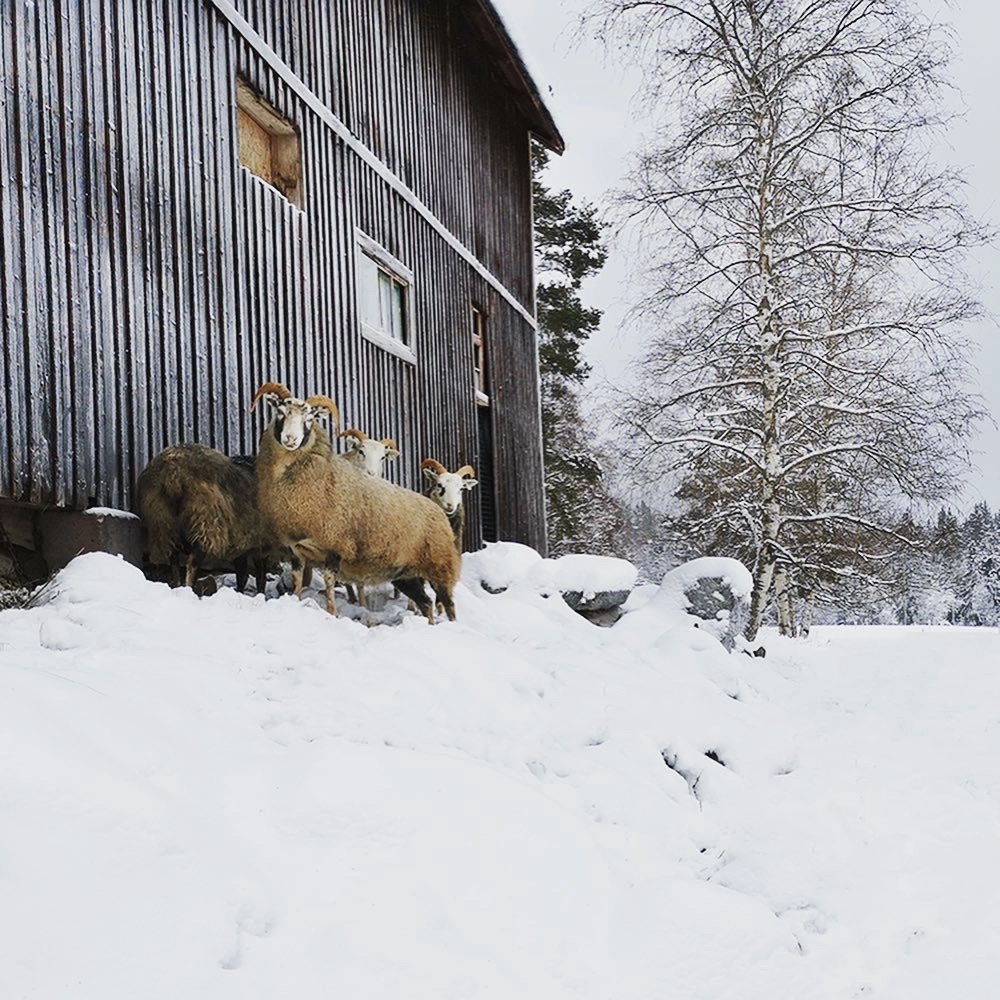
They may also lie down outside a gate or barn door and wait, sometimes lightly covered in snow. During this time, they rarely leave their post. This usually continues for about two days.
The fencing
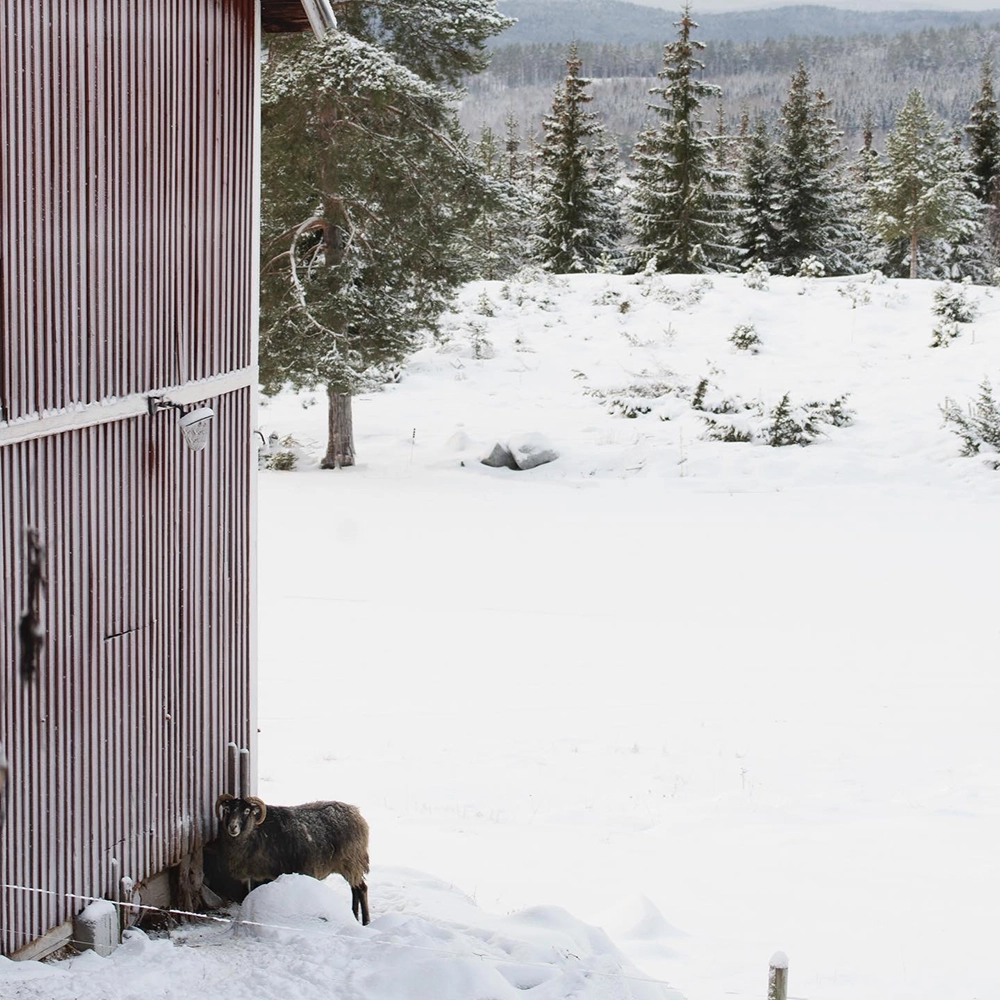
The strongest and most obvious heats are the first ones. I keep my rams on a neighboring property, and to be absolutely certain they do not simply walk through the fence when the heat is at its most intense, I put up sturdy gates around the exercise yard during December and January.
It is primarily the rams who do the seeking during the breeding season. It often begins quietly, with them standing and gazing in the direction of the ewes. When that behavior appears, I know it is high time to put the gates in place.
However, some ewes can be quite enterprising. They may stand and bleat for no apparent reason, but if they are facing toward the rams, their intention is clear. On two occasions, I have even experienced ewes taking matters into their own hooves and setting off on a walk to the rams, covering distances of just over a kilometer, with the rams out of both sight and hearing.
The challenge in winter, for both ewes and rams, is that it is much harder to maintain proper power in the fencing. These days, I do not rely on electricity for the rams’ enclosure during winter. The time they are most likely to leave their food and shelter is during the breeding season, and by then the high gates are already in place. The ewes have no electric fencing in winter, as they normally do not leave the farm. But if an enterprising individual is driven by hormones, she will test whether the fence can be breached, and if it can, she will go.
Genetics and synchronization
When ewes come into heat is largely genetically determined, but it is likely also a matter of synchronization within the flock. My first two ewe lines were very reliable in their cycles. They stayed with the ram year-round and lambed consistently during the last week of April or the first week of May.
Over time, I purchased several unrelated ewes from three other flocks. In my view, two of these lines were less dependable. They lambed much earlier than I was used to, often as early as March. Where I live in Ångermanland, that is too early in my opinion, the risk of severe cold snaps is still high.
The ewes that differed have also produced daughters who were early, even when those daughters remained on the farm. For me, this has confirmed that early heat is largely hereditary.
Related articles:
Keeping several rams together
Back to the articles