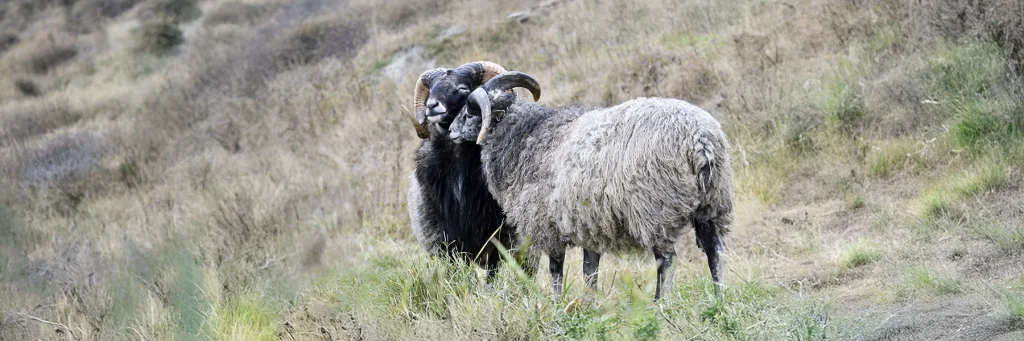
Keeping several rams toghether
Keeping rams in a group works well – under the right conditions. This is how I create calm, stable groups and a safe environment for rams, other sheep, and people alike.
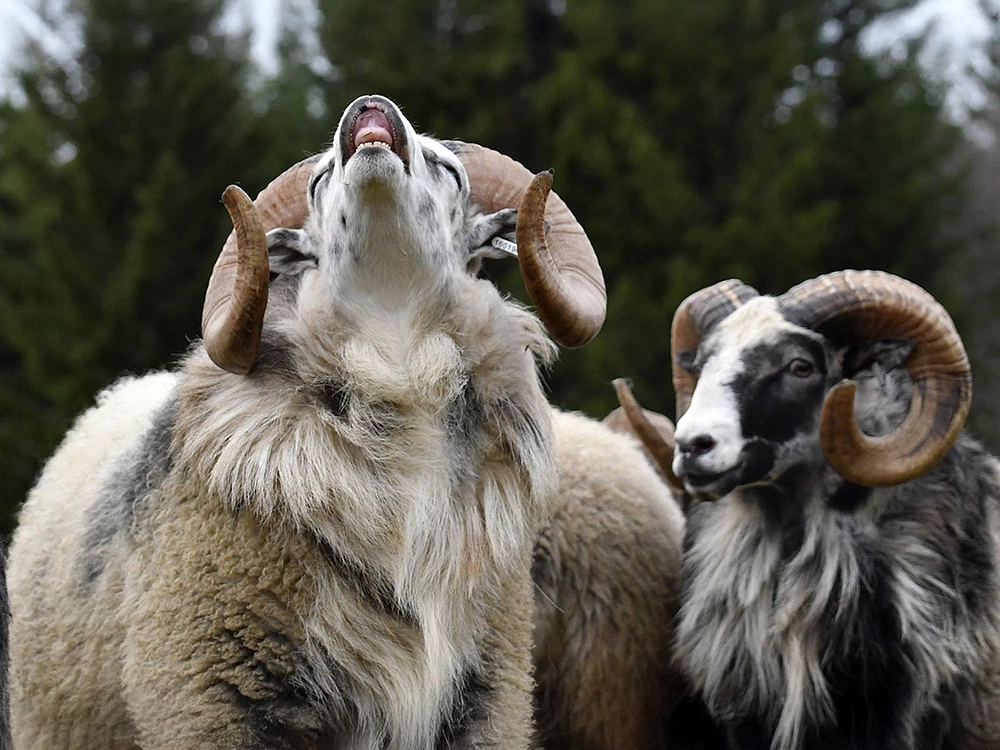
Keeping several rams tends to attract attention – and questions. These are my thoughts and experiences on raising multiple rams in a way that creates harmony, safety, and a good life for them.
I often bring guests from my holiday cottages to meet the animals, and the encounters are always calm and pleasant. Many rams are less cautious than the ewes and therefore easier to approach and touch. That may also be because they live in smaller groups and become more accustomed to close contact with people.
My experience is that keeping several rams together works very well; the number matters less than the principle. My basic belief is that animals remain calm when their needs are met, when they are well fed, have something to do, and live in an environment with varied pastures, and when they are not unnecessarily triggered by external factors (such as peak heat).
The flock usually includes around ten rams, mature animals and a few growing youngsters. The younger ones are almost always kept until about 1.5 years of age before the first selection is made. They are never castrated and are never kept isolated in stalls unless one is ill, and it takes a great deal before I consider isolation better than allowing them to remain with their flock.
When it comes specifically to Gutefår, it is entirely possible to keep the ram with the ewes year-round, as long as the breeding period is secure and you intend for all ewes to be covered. If not, and if you also want to avoid removing the ram to prevent inbreeding, keeping multiple rams is a good solution.
Growing up
Ideally, a young ram should grow up within a group of other rams. This does not mean they are disciplined, older rams do not “raise” lambs in that sense.
I separate ram lambs from the ewes when I notice the first signs of interest: they scent the air, lift their upper lip, and flehmen. This usually happens in October, when they are around six months old.
A few words about flehmen. This is a behaviour rams use when analyzing scents, primarily pheromones, to determine whether a ewe is in heat. It has nothing to do with aggression or dominance.
The behaviour is most often seen during the breeding season (I suspect rams have a biological clock that tells them when the time is approaching), when they catch the scent of a ewe, or as they begin to reach sexual maturity.
Physically, they rely on what is known as the Jacobson’s organ (the vomeronasal organ), often the first sign that hormonal changes are underway.
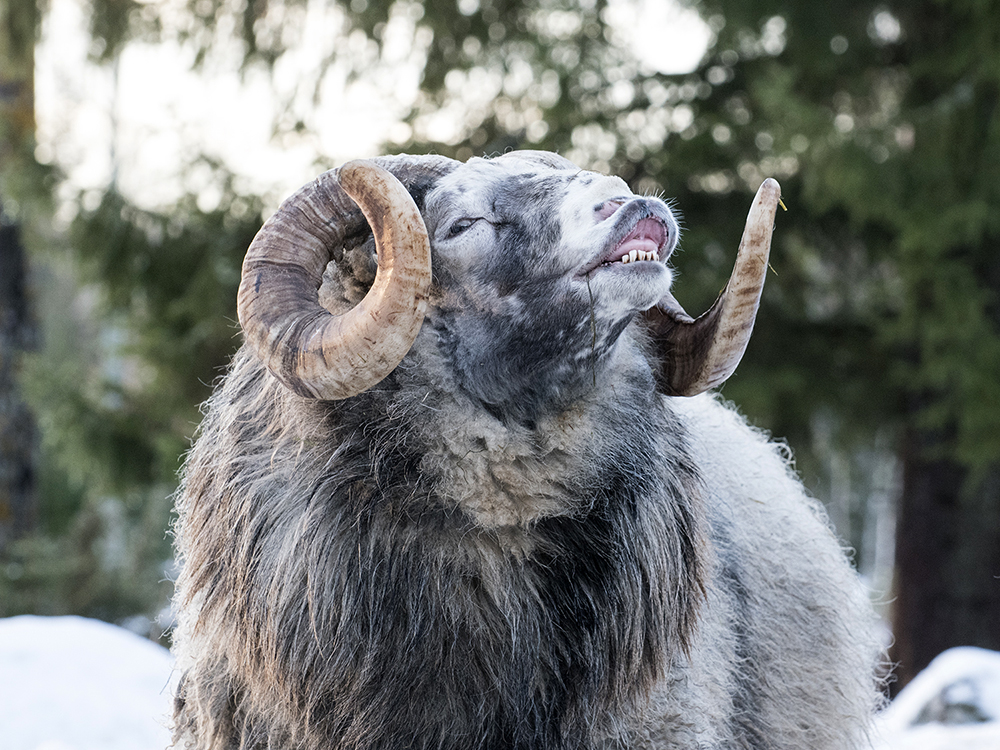
Separate from the ewes
Whenever possible, I keep the rams completely separate from the ewes. For many years now they have lived on a neighboring property, close, yet well apart. I generally avoid keeping them near the ewes during the year. The reason is not that conflicts occur outside the breeding season, but that I want to remind them as little as possible of what is nearby once the season begins.
Before I had access to that property, they stayed with the ewes outside the breeding period. Gutefår ewes typically come into heat from late November or early December through April, and this worked well. The rams usually kept somewhat to themselves. In large pastures they often chose a field of their own. I cannot say exactly why, but my impression was that they deliberately stayed together and kept their distance.
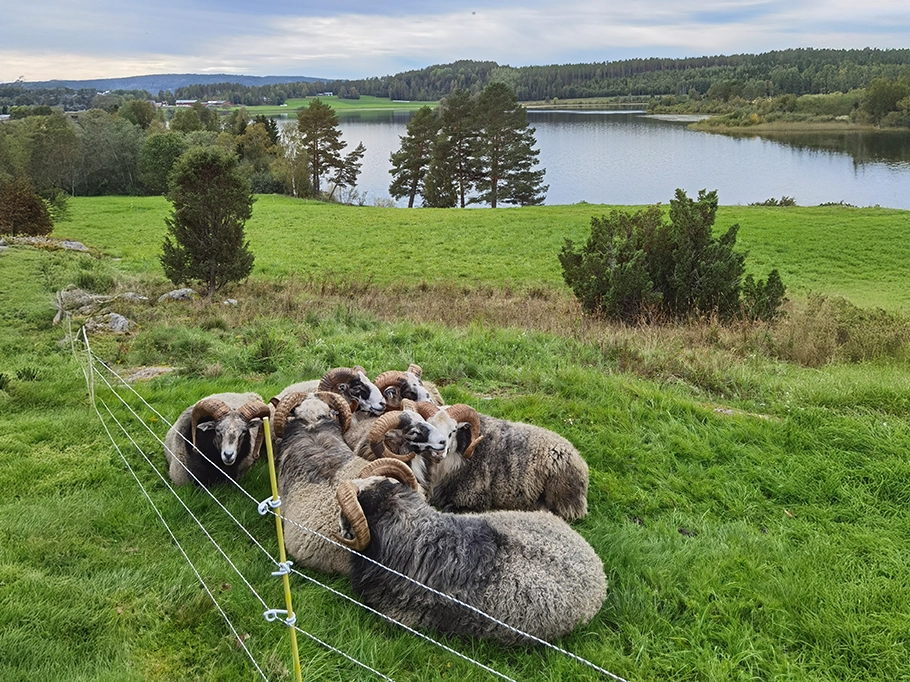
When I had only one or two rams, they spent more time with the ewes. With four or more, they tended to separate themselves, always close together. The same is true today on their own property. They are easy to count because they stay tighter as a group than the ewes. If one is missing, something is usually wrong.
Feeding and handling
I never give them anything beyond their regular feed. Offering bread or treats tends to increase competition and makes the group more unsettled, perhaps only temporarily, but unnecessarily so.
I also avoid entering their enclosure if I have just been with ewes in heat. I assume it can trigger their hormones.
I pet them, scratch them, and even kiss them. That is not what makes a ram aggressive. Aggression is more a matter of genetics and how they are managed.
Pastures and breeding season
For most of the year, except during peak breeding season in December and into January, they graze large areas of field, pasture, and forest. When I introduce the younger rams to the older group in October, I reduce the grazing area slightly so the electric fencing remains effective.
As the breeding season approaches, you can see them standing by the fence, gazing longingly toward the farm where the ewes live. At that point, the electric fence is replaced with sturdy, high gates. They have their ram house and can move freely in and out, but their outdoor space is smaller. Winter arrives, the intensity of the season fades, and the need for high gates disappears.
Introducing new rams
When I bring in a new ram, it is usually uneventful. There are moments when my basic philosophy becomes especially clear, and this is one of them. The best conditions for calm and harmony are when animals have what they need: food, something to occupy them (large, varied pastures), and when they are not unnecessarily triggered by outside factors (such as peak breeding season).
The last time, I first introduced the newly purchased ram (1.5 years old) to the young rams, who were grazing separately in a field. I thought they might benefit from having a slightly older ram with them. It turned out to be a mistake. There was more commotion than if he had gone straight in with the adults. The youngsters swarmed around him and kept trying to mount him.
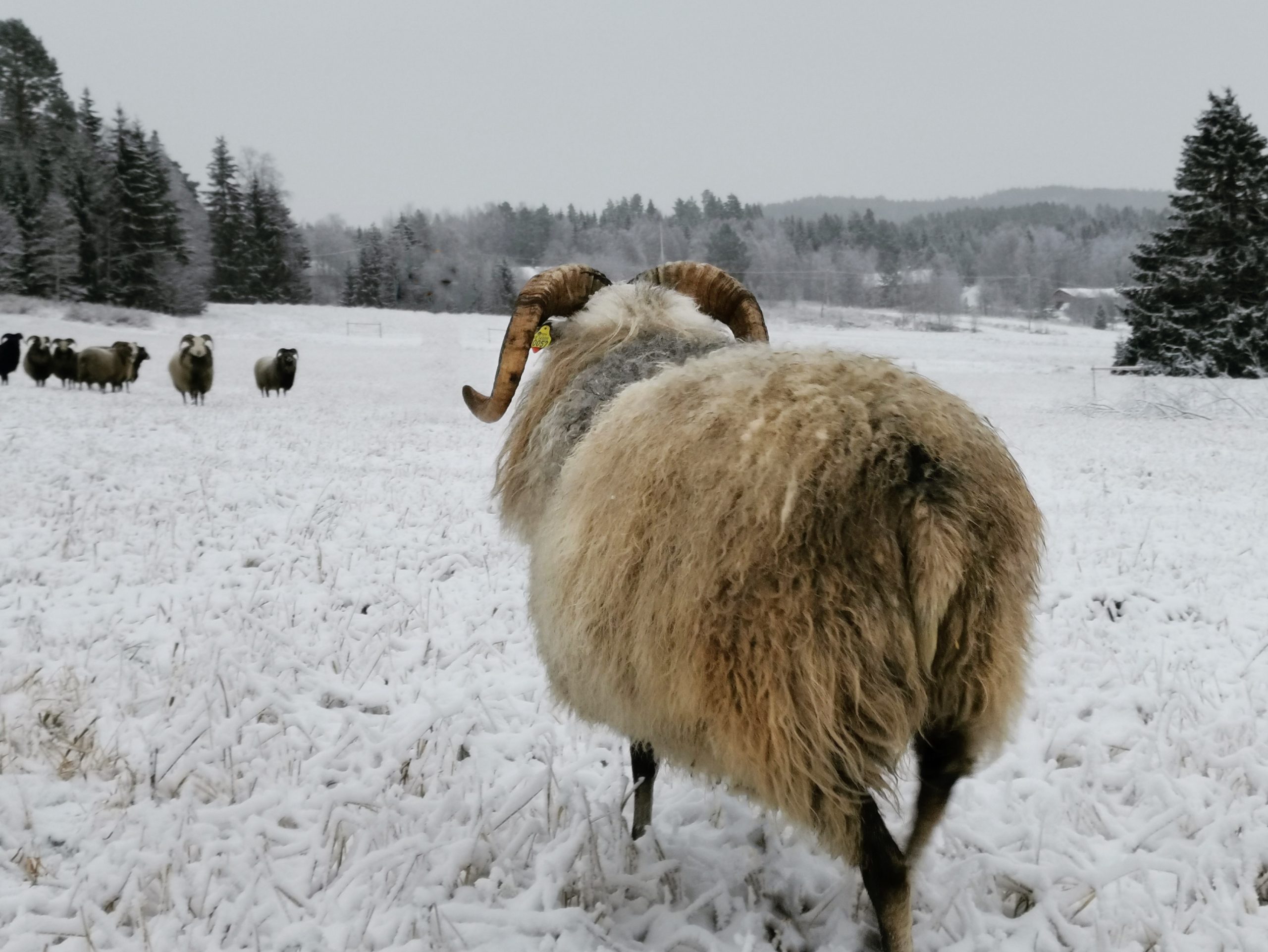
The same thing can happen when younger rams are introduced to older ones. The adults usually do not mind, and it passes quickly, but not always. Genetics and temperament likely play a role, along with other factors I cannot always see.
One year I had only two adult rams, calm, gentle gentlemen. When the ram lambs joined them in autumn, they were so persistent that one of the adults eventually backed into a corner just to be left alone.
Breeding and return
The ram is brought to the ewes around late November or early December, depending on when lambing is desired. Rams respond differently to ewes in heat. Some become more temperamental, requiring extra caution, it is wise not to turn your back on them, while others barely change at all.
A good Gutefår ewe is reliable in her heat cycle. In my view, she should not lamb before April, a perspective shaped by living in Ångermanland. Once the grazing season begins, there is a risk that a ewe will wander far with her lamb. I prefer that they stay close to the feeding area during those first weeks.
When breeding is over, after just over three weeks (ewes typically cycle about every 18 days, sometimes longer), I either walk the ram home or transport him by car. Driving is preferable, there is no need to point out exactly where the ewes are. I rarely breed all the ewes, and some will continue to smell appealing for a while.
It has happened that a returning ram jumped the feeding fence to get back to the ewes. These days I have gates there as well. It complicates feeding somewhat, but it is worth it to keep breeding under control.
When the ram returns to the “gentlemen’s club,” it is easy to assume there will be conflict, but there never has been. The others become excited, running and rumbling as if courting the returning ram. I suspect that, because of the scent of the ewes, they first mistake him for one, then quickly realize their error. Within minutes, calm is restored.
More about ewes in heat
I learned the hard way that ewes can return to heat. Early in my sheep-keeping years, I lent out my ram twice during one winter because I had not planned on lambing. I brought him home far too early, and ended up with lambs in the first week of August. I had four ewes at the time, and all lambed within the same week.
Another experience involved a ram who patrolled the fence instead of eating. This was during the years when I kept four rams on the same property as the ewes, separated only by fencing. He walked back and forth along the fence until I moved it closer to the feeding area.
The importance of growing up in a group
One ram lamb was loaned out in November to another flock. He was the most promising lamb that year, strong both in conformation and lineage. The loan lasted longer than planned because the owners moved to a larger farm farther north. When he finally returned, he was still kind, but slightly more on edge. No fighting, just minor scuffles, and now, nearly two years later, it has not entirely faded.
Summary
In my experience, rams benefit greatly from each other’s company. They move together, rest close to one another, scratch against each other’s horns, and are pleasant to be around.
If one turns out not to be good-natured, he is removed. For me, bringing in an aggressive ram is unthinkable. I do not want those genetics in my flock, and such a ram becomes a safety risk, for people, ewes, and especially the other rams. I will not expose my good-natured animals to one that is not.
An aggressive ram will often charge the others from behind when competing for water or feed, building momentum before striking the hindquarters. Injuries are easy to imagine, and life within the group becomes insecure.