The gutefår flock
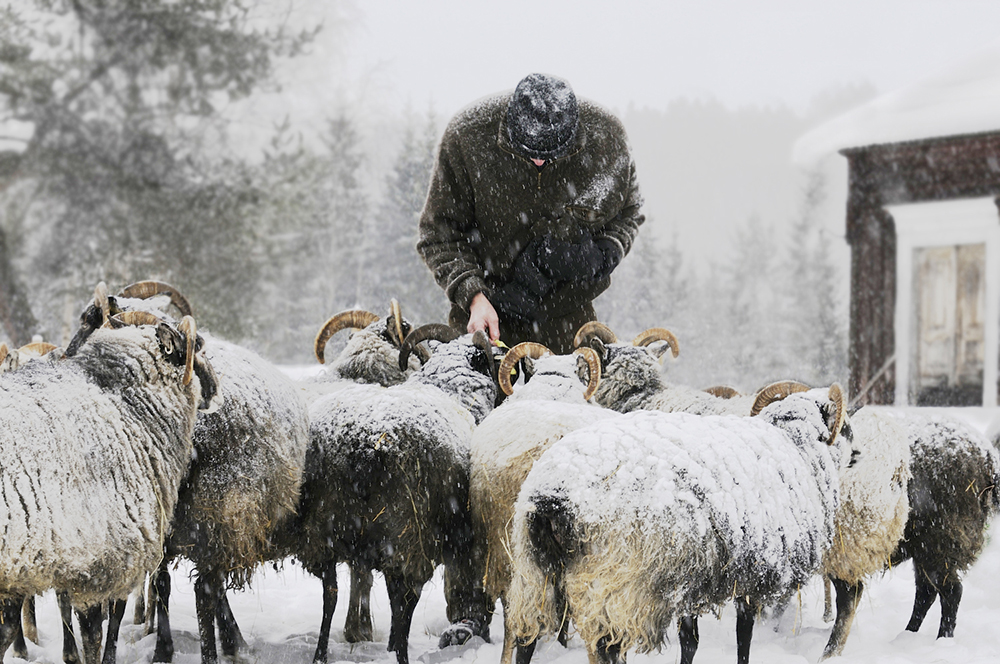
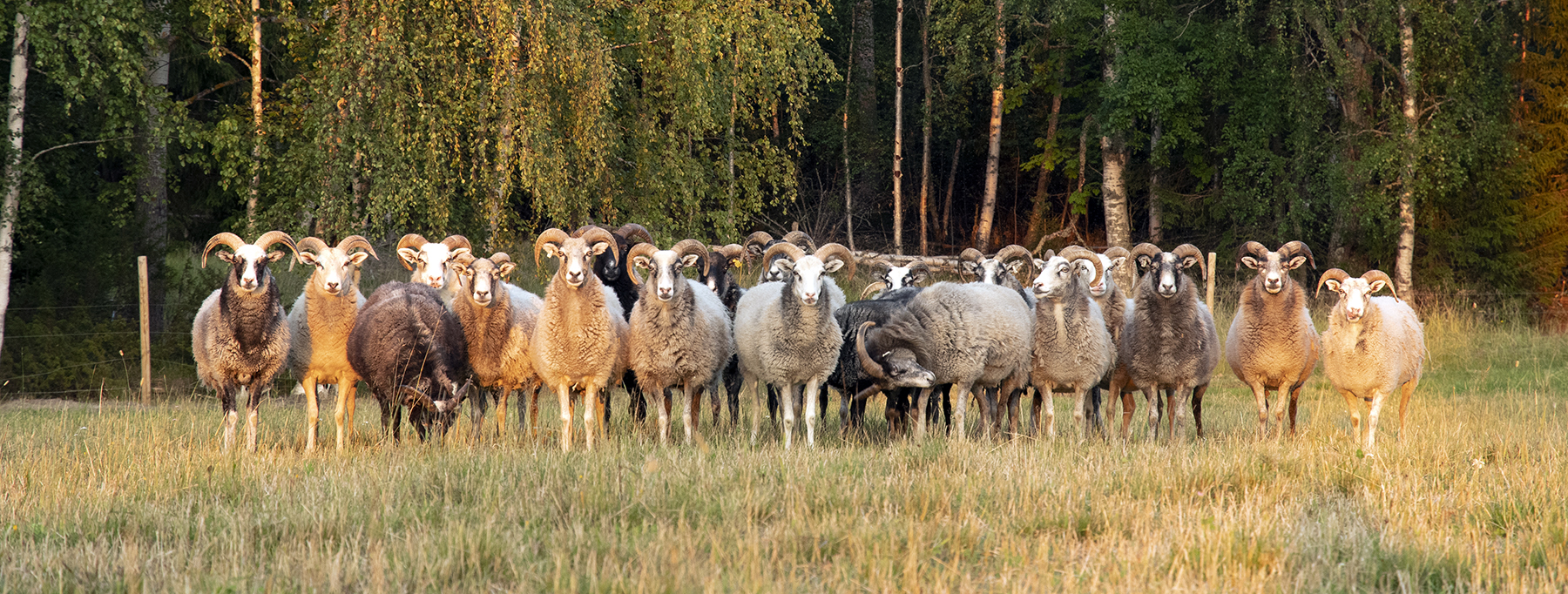
The flock normally consists of 40 to 50 adult animals, including a larger group of rams. The lambs are kept until they are about 1.5 years old before breeding selection and their first mating take place. Each year, roughly one third of the ewes are bred, and the animals remain for as long as they stay healthy. During their final years they live as pensioners, meaning the older ewes stay with those that have lambed. That group is given the best pasture and is moved less frequently.
The rams, who are kept on a separate farm, also remain into old age. However, they are never kept with the ewes except for selected individuals during the breeding season in December.
The ewes lamb in April and May.
In the latter part of autumn, the ram lambs are separated from the ewes and moved to the ram group. This is usually very uneventful, ram lambs detach from the ewes much earlier than ewe lambs, who often continue to follow their mothers for several years.
The animals are largely kept to help maintain an open landscape. They graze several farms and large areas, early in the season pasture, forest, and upland terrain, later feeding on regrowth in the fields. Some enclosures are up to seven hectares in size, and the sheep are often moved with the help of a herding dog to reduce parasite pressure and to keep both woodland and pasture open.
The flock is well trained for herding, and both ewes and rams move calmly when guided by a herding dog.
The animals are Maedi Visna-free and registered with the Gutefår Gene Bank Association and Elitlamm.
The rams are inspected when appropriate by official ram inspectors from the Gutefår association. I am myself a certified ram inspector in my geographic area, northern Sweden.